
App-less Loyalty: Building Digital Loyalty Passes for SMEs Without an App
App-less Loyalty enables SMEs to issue membership cards directly via Apple Wallet and Google Wallet. This solution boosts counter sign-up rates, reduces friction, and saves custom app development costs.
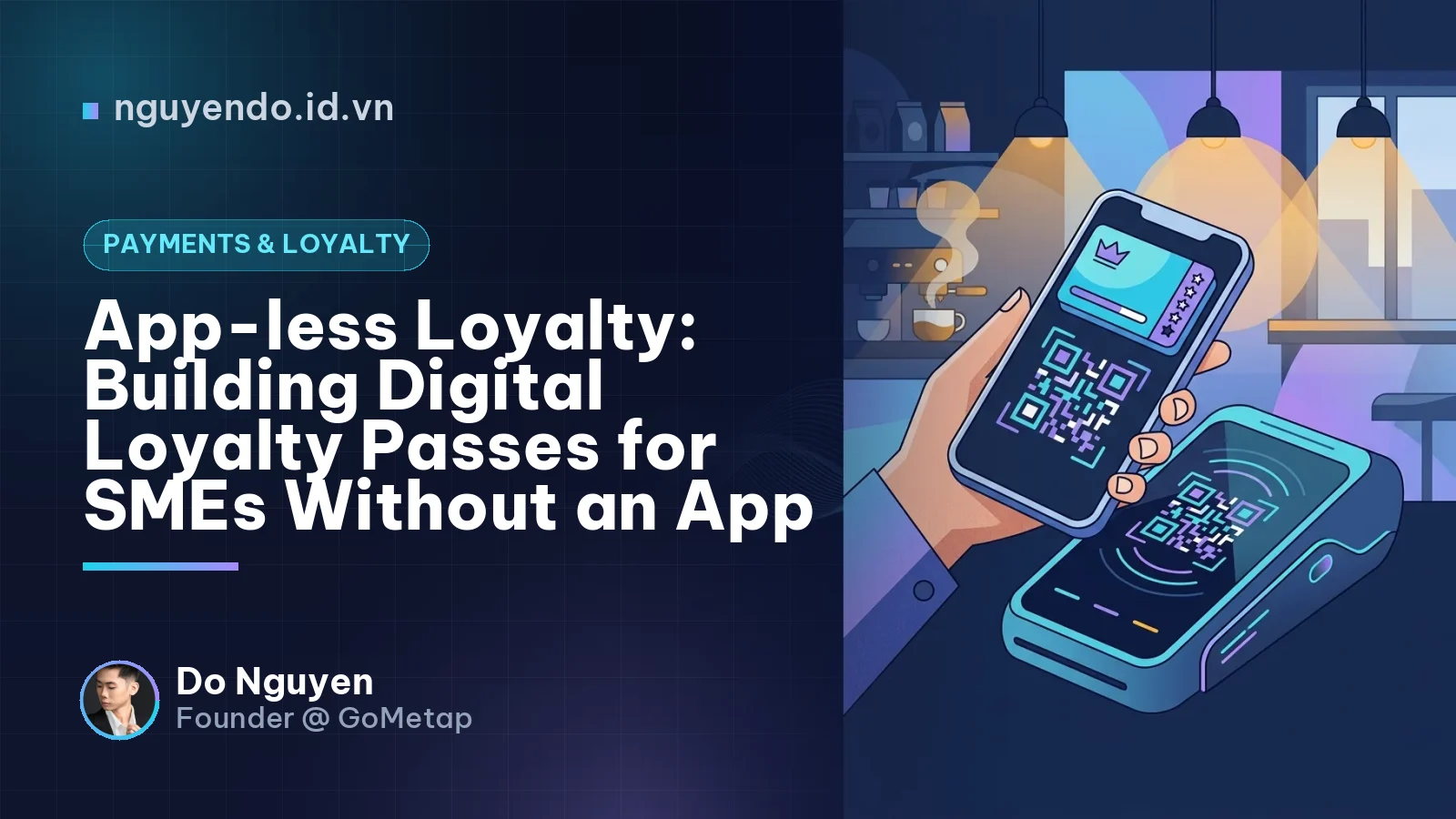
Table of contents
- What Is App-less Loyalty? Why Shouldn't SMEs Build Their Own Apps?
- Comparison: Custom Mobile App vs. App-less Loyalty
- How the App-less Loyalty Ecosystem Works
- 1. Frictionless Onboarding (Zero-Party Data Collection)
- 2. Geo-fenced Push Notifications
- 3. Omnichannel CRM Data Synchronization
- 4 Steps for SMEs to Implement App-less Loyalty
- Final Thoughts
App-less Loyalty is a customer retention strategy that leverages existing digital wallet platforms like Apple Wallet, Google Wallet, or super-apps to store membership passes and track reward points. This solution helps small and medium-sized enterprises (SMEs) avoid the high costs of custom app development while removing onboarding friction, allowing customers to join effortlessly at the checkout counter with just a single scan.
With customer acquisition costs (CAC) climbing rapidly, retaining existing customers has become a matter of survival for SMEs. However, a common misstep among many founders is attempting to build a proprietary mobile app and forcing customers to download it.
What Is App-less Loyalty? Why Shouldn't SMEs Build Their Own Apps?
App-less Loyalty is a customer care model that does not require users to download any standalone app from the App Store or Google Play. Instead, it utilizes built-in utility platforms already available on their smartphones to deliver perks, accrue points, and store digital membership passes.
When planning digital transformation, many F&B or retail business owners set a vanity goal: "We must have our own app to look professional." In reality, this is often an operational and financial trap:
- Massive development and maintenance costs: Building even a basic app costs anywhere from hundreds of millions to billions of VND, not to mention recurring expenses for server infrastructure, bug fixes, and updates for every new iOS/Android release.
- Severe download friction: Modern consumers are reluctant to install new apps. Unless you are a multinational chain with daily purchase frequency, asking customers to connect to Wi-Fi, open an app store, download an app, wait for installation, and enter an OTP right at the checkout counter creates a frustrating experience. It bottlenecks queues and alienates shoppers.
- High uninstall rates: Even if shoppers download an app to claim an initial free beverage, they often delete it within days to free up storage space.
Comparison: Custom Mobile App vs. App-less Loyalty
| Criteria | Custom In-House App | App-less Loyalty (Apple/Google Wallet) |
|---|---|---|
| Upfront investment | Very high | Low (subscription-based SaaS model) |
| Time to launch | 3 - 6 months | 1 - 2 weeks |
| Sign-up rate | Low (too many steps) | Very high (one-tap pass saving) |
| Checkout counter experience | Slow, causes queues | Fast, frictionless |
| Maintenance & upgrades | Complex and expensive | Handled automatically by the SaaS platform |
How the App-less Loyalty Ecosystem Works
An effective App-less Loyalty system relies on tight integration between three components: Point of Sale (POS), Payment Gateway (VietQR/Cards), and Digital Wallets (Apple Wallet/Google Wallet).
1. Frictionless Onboarding (Zero-Party Data Collection)
Instead of cashiers asking: "Could you share your phone number so I can add your points?" (which leads to data entry errors, communication issues in noisy venues, and privacy concerns), an app-less flow works smoothly:
For example, at a milk tea shop:
- The cashier finalizes the order on the POS system.
- The customer-facing display generates a dynamic VietQR code with the exact order total.
- The customer scans the VietQR code using their mobile banking app to complete payment.
- Once payment succeeds, the screen presents a second QR code (or the customer taps their phone on an NFC tag at the counter) with the prompt: "Save your membership pass to Apple Wallet to receive 10% off your next purchase."
- The customer confirms. The pass is added directly to their Apple Wallet or Google Wallet along with the reward points earned from that transaction.
The entire interaction takes under 30 seconds. No phone numbers spoken aloud, no apps downloaded, and customer data is automatically captured in the merchant's CRM.
2. Geo-fenced Push Notifications
One of the most powerful capabilities of Apple Wallet and Google Wallet is sending push notifications directly to the customer's lock screen without incurring fees for SMS or Zalo ZNS.
Crucially, these platforms support location-based notifications. When a customer comes within a 100-meter radius of your venue, their phone automatically wakes up with a targeted alert: "Good morning! Your loyalty pass has a Buy 1 Get 1 Coffee deal today. Drop by!" This serves as a highly effective O2O (Online-to-Offline) mechanism to drive foot traffic.
3. Omnichannel CRM Data Synchronization
With App-less Loyalty, every touchpoint must converge into a Single Source of Truth. Whether a customer shops via a Facebook Fanpage, orders over Zalo, or visits a brick-and-mortar store, they are identified by a single tokenized identifier (typically their phone number mapped to the Wallet pass).
At GoMetap, our ecosystem is built precisely around this philosophy. The in-store POS, automated payment flows, and Wallet pass issuance engine must synchronize in real time. The moment a customer taps a Visa card or scans a VietQR code, their point balance on Apple Wallet updates instantly. This real-time feedback loop provides gamification, encouraging customers to return and reach the next membership tier.
4 Steps for SMEs to Implement App-less Loyalty
If you are a founder or store operator looking to digitize customer retention, use the following framework:
Step 1: Standardize POS and payment infrastructure You cannot run an effective loyalty program on manual order handling and fragmented billing. Ensure your POS software provides open APIs to connect with CRM platforms and supports dynamic VietQR generation for precise order attribution.
Step 2: Design a straightforward loyalty policy Avoid complex, convoluted tier systems. Start with a clean earn-and-burn points model (e.g., 10,000 VND = 1 point; 100 points = 1 free drink). The simpler the structure, the faster customers adopt it. Ensure your Wallet pass features clear branding and an appealing visual layout.
Step 3: Configure marketing automation workflows Set up automated triggers within your CRM platform, such as:
- Sending tier-upgrade alerts once spending thresholds are reached.
- Automating birthday vouchers delivered to Wallet passes 3 days in advance.
- Win-back campaigns: Sending a re-engagement nudge if a customer has not visited in 30 days.
Step 4: Train front-line staff Even the best technology fails if counter staff cannot communicate its value. Frame the sign-up as an immediate benefit rather than a chore. Instead of asking: "Would you scan this to register as a member?", staff should say: "Your order earned 15,000 VND toward your next visit. Just tap your phone here to save the discount directly to your wallet."
Final Thoughts
In the digital era, the best customer experience is invisible—where technology works in the background to prioritize pure convenience. App-less Loyalty powered by Apple Wallet and Google Wallet offers an ideal retention playbook for SMEs in Vietnam: low cost, fast rollout, and seamless alignment with real-world consumer behavior.
Comments
No comments yet. Be the first to share your thoughts!