
Building a Referral Program with Apple and Google Wallet Passes
How digitizing referral programs via Apple and Google Wallet passes helps SMEs lower CAC, maintain transparent tracking, and automate reward fulfillment.
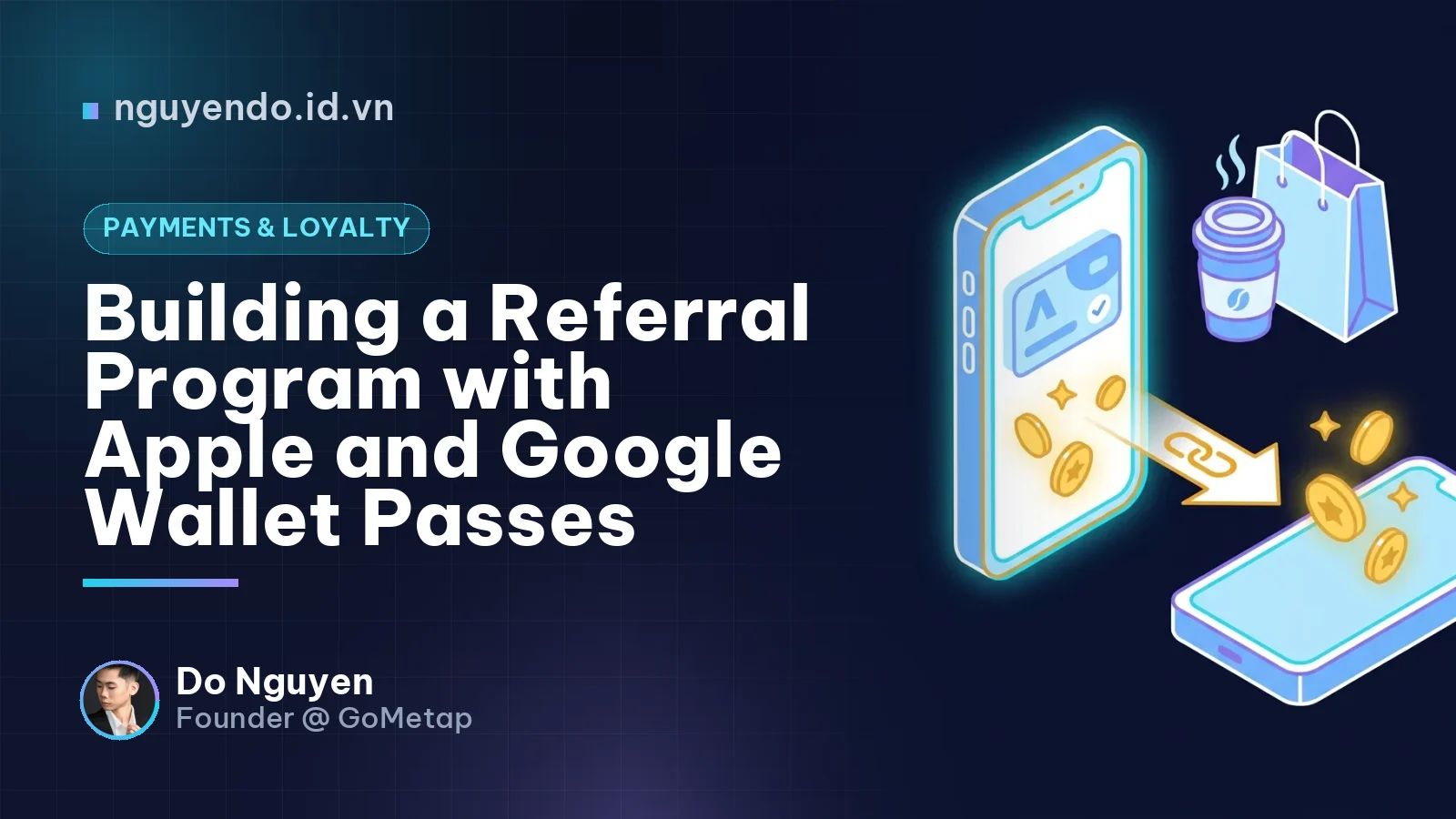
Table of contents
- What Is a Referral Program?
- Why Apple/Google Wallet Solves the Offline Tracking Problem
- Referral Channels Comparison Table
- How Wallet Referral Operates at the Counter
- 3 Principles for Designing an Effective Reward Structure
- 1. Always Use a "Double-sided Reward"
- 2. Deliver Instant Gratification
- 3. Choose Retention-Driven Rewards
- Key Metrics to Track
- Conclusion
An Apple/Google Wallet referral program digitizes word-of-mouth marketing, allowing existing customers to share a pass issuance link with friends via social media or messaging apps. When the new customer saves this pass to their phone's native digital wallet and scans the code at checkout, the POS system automatically records the sale and instantly rewards both parties. This is an optimal method for SMEs to reduce customer acquisition costs (CAC) without requiring users to download a dedicated mobile app.
What Is a Referral Program?
A referral program is a systematic marketing strategy that incentivizes existing customers to leverage their personal networks to introduce new customers to a business in exchange for specific rewards.
For O2O (Online-to-Offline) businesses like F&B, spas, or traditional retail, referrals are the acquisition channel with the highest conversion rate because they rely on trust between peers. However, the biggest barrier for brick-and-mortar models has always been tracking who referred whom to issue rewards accurately.
Why Apple/Google Wallet Solves the Offline Tracking Problem
Previously, to run a "Refer a Friend" campaign, coffee shops or barbershops often used paper vouchers (asking customers to write their name on the back and hand it to friends to bring into the store). This approach is manual, prone to loss, hard to aggregate data, and frequently overlooked by cashiers.
Another solution was requiring users to download the brand's mobile app to get a referral code. However, app install conversion rates today are remarkably low, especially among new users who haven't experienced the service yet.
Apple Wallet and Google Wallet passes solve this bottleneck seamlessly:
- No app download required: The pass is saved directly to native wallet apps pre-installed on iOS and Android.
- Frictionless sharing: Customers simply tap the "Share" button on the pass (or copy a unique link on Zalo/messaging apps) to send it to friends.
- Automated tracking: The shared link contains the referrer's ID. When the friend clicks the link and adds the new pass to their wallet, that pass has the referral code embedded. Once scanned at the POS counter, the system immediately identifies the referral relationship.
Referral Channels Comparison Table
| Criterion | Paper Vouchers | Mobile App | Apple/Google Wallet Passes |
|---|---|---|---|
| Implementation cost | Low | Very High | Moderate / Low |
| Tracking capability | Poor, depends on cashiers | Excellent | Excellent, synced directly with POS |
| User adoption rate | Moderate (easy to lose) | Low (app install friction) | High (one-tap save to wallet) |
| Reward fulfillment | Manual | Automated | Automated via push notifications |
At GoMetap, we consistently emphasize to SME partners: Any workflow requiring customers or cashiers to perform more than 3 steps at the counter carries a high risk of failure. Leveraging digital wallets and automating reward fulfillment is key to making referral programs genuinely work in practice.
How Wallet Referral Operates at the Counter
To run this model smoothly, you need a customer relationship management (CRM) system integrated seamlessly with your in-store POS. The standard user journey flows as follows:
- Launch the campaign: The business sends a free push notification via the existing customer's Apple/Google Wallet pass: "Get 50,000 VND and give friends 20% off on successful referrals. Tap to get your referral link!"
- Share: The existing customer copies the link or personal QR code and sends it via Zalo/Messenger to their friends.
- Save pass (Acquisition): The friend clicks the link. The browser automatically displays a new-customer Welcome Card. They tap "Add to Apple Wallet / Google Wallet".
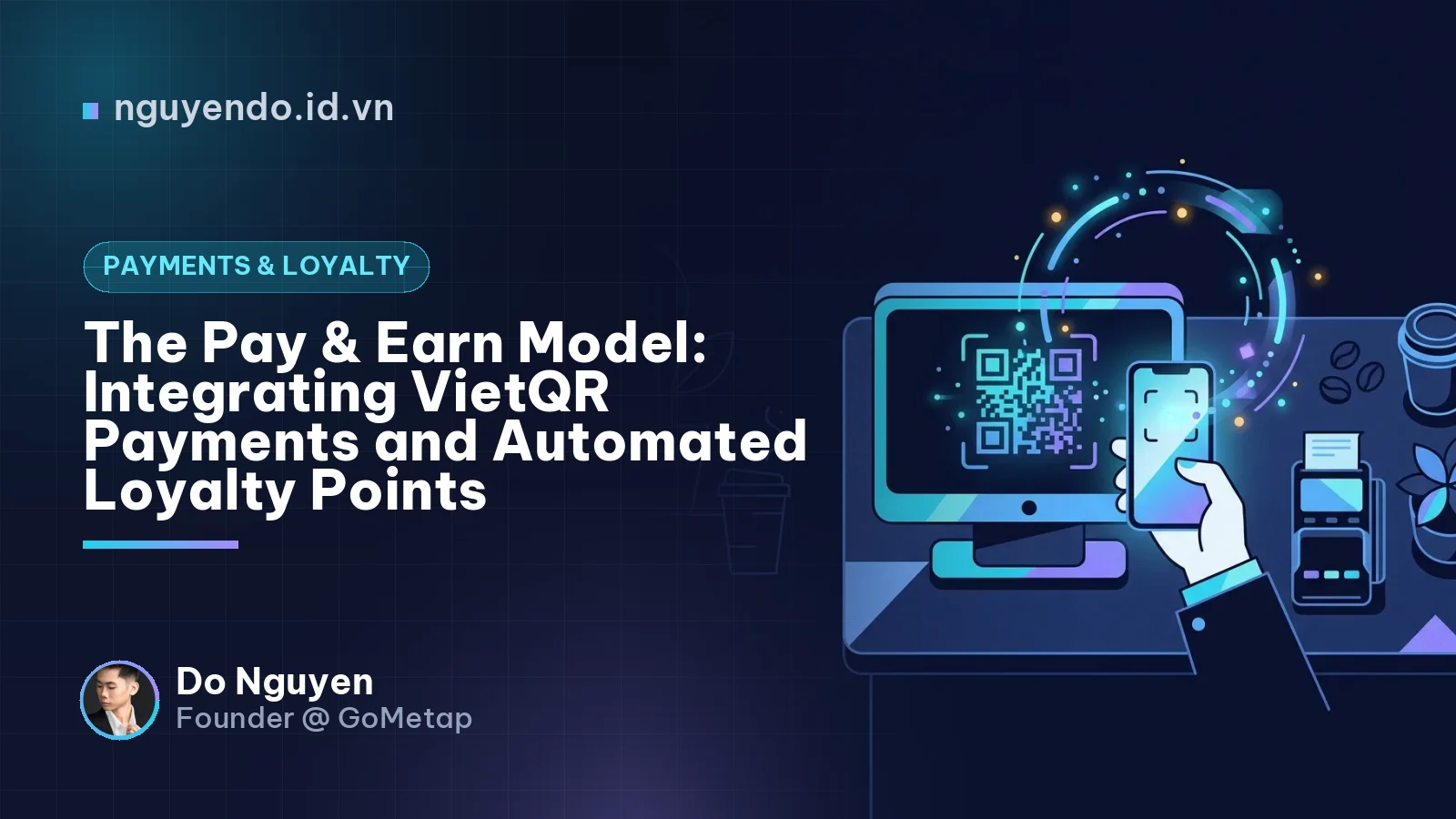
- O2O Transaction: The friend visits the store and presents the wallet pass for the cashier to scan the barcode/QR code. (This can be paired with VietQR payments to create a seamless one-tap Pay & Earn flow).
- Automated fulfillment: The POS confirms the transaction. The CRM automatically credits 50,000 VND or reward points to the referrer's wallet pass, while their phone screen lights up with a push notification: "Congratulations! You just received 50,000 VND because your friend completed a purchase."
3 Principles for Designing an Effective Reward Structure
Referral programs only take off when the incentives align with customer psychology.
1. Always Use a "Double-sided Reward"
A double-sided reward is an incentive structure where both the referrer and the referee receive tangible benefits upon a successful purchase. If you only reward the referrer, they may feel like they are exploiting their friendship for profit. If you only reward the new customer, the existing customer has zero motivation to share. For example, a coffee shop might offer: The referrer gets 1 free drink, while the new customer gets 30% off their first order.
2. Deliver Instant Gratification
Don't make customers wait until the end of the month for reconciliation and payout. The thrill of word-of-mouth campaigns lies in speed. When a wallet pass delivers an instant push notification right as the friend checks out at the counter, it creates a powerful psychological reward (a dopamine hit) that encourages the customer to refer more friends.
3. Choose Retention-Driven Rewards
Instead of cash payouts, offer loyalty points, tier upgrades, or store credit. This directs spend back into your business, transforming acquisition costs into retention revenue.
Key Metrics to Track
As a founder or business owner, you manage by data. When running a referral campaign, do not just look at gross revenue; track these 3 core metrics:
- K-Factor (Virality Coefficient): The average number of new customers brought in by each existing customer. A K-Factor > 1 indicates viral, exponential growth.
- Referral Conversion Rate: The ratio of saved new wallet passes to customers who actually visit the counter, scan the pass, and complete a transaction.
- Referred Customer LTV vs. Organic Customer LTV: Referred customers typically have a 16–25% higher Customer Lifetime Value (LTV) than organic customers, as they arrive with social proof and built-in trust.
Conclusion
Turning loyal customers into brand advocates is not a new concept, but technology has fundamentally changed how we execute it. With Apple Wallet and Google Wallet passes integrated into modern POS systems, SMEs in Vietnam can build viral loops just as effective as enterprise solutions—with virtually zero operational overhead once properly configured.

Comments
No comments yet. Be the first to share your thoughts!